In 1896 he extended the system in Waterloo by converting the horse-car line into an electric line.
In 1897 he built the line to Cedar Falls.
In 1898, he made further extensions in Waterloo.
In 1899, he purchased the Cedar Falls & Normal Gasoline Road which he converted into an electric line.
In 1901 he built the line to Denver, Iowa.
In 1902 he extended it to Denver Junction to connect with the Omaha division of the Great Western.
In 1910 he extended the line from Denver Junction to Waverly.
In 1912 he built the road from Waterloo to La Porte City.
In 1913 he built the line from La Porte City to Urbana.
In 1914 he completed the line from Urbana to Cedar Rapids.
The trolleys that ran to Cedar Rapids had open observation platforms, individual seats, and served meals! Those who used this service remember the plush cars and the speed at which it traveled (90 mph). As more and more families purchased their own vehicles, the company began losing money and made its last run to Cedar Falls in 1958.
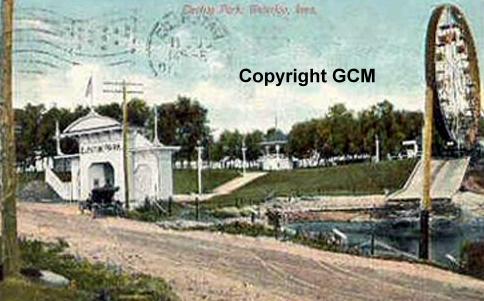
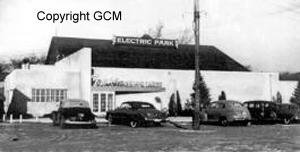
In 1934, the "New" Electric Park Ballroom was constructed after the earlier fire.� The driving force behind the development of the famed ballroom was once again, R.E. Peterson.
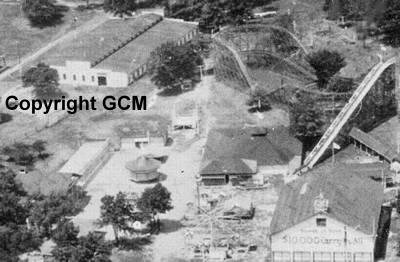
Also constructed was a new site for the barrel of fun and the merry-go-round, with all the property now included in the city limits of Waterloo.
The likes of Jimmy Dorsey, Glen Miller, and Guy Lombardo were top draws at 25 cents a head.
In the late 50's, Electric Park took to rock and roll like so many other ballrooms in the region with bookings for Conway Twitty, The Everly Brothers, Dion, Johnny & The Hurricanes and Bill Black's Combo being common.
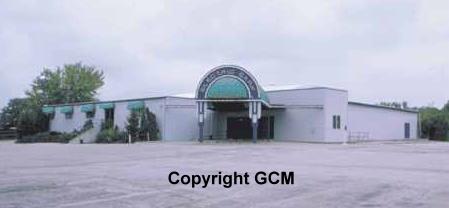
Today the ballroom is operated by The National Cattle Congress which has done a superb job with operation and upkeep on this beautiful facility.
We'd all like to welcome to The Hall of Fame, the famed Electric Park Ballroom of Waterloo, Iowa, still rockin' after all these years.
Built: 1906 (fire destroyed some of structure)1936 (present structure)